


Featured Resources
-
STORM Therapeutics: From Lead to Pre-Candidate Nomination in 18 Months

STORM Therapeutics: From Lead to Pre-Candidate Nomination in 18 Months
Case study
📣 Connected drug discovery, united under one name. Discover the story behind our refreshed identity.




July 30, 2015

Inobrodib, an exciting, first-in-class oral anti-cancer drug in clinical development by CellCentric, was collaboratively designed, synthesised and supported on its pre-clinical journey by an integrated project team at Sygnature Discovery. Inobrodib is now showing promising results in Phase I and II trials for multiple myeloma and other cancer types.

At Sygnature Discovery, we deliver world-leading drug discovery solutions to accelerate your compound from idea to clinic.

Our leadership team brings diverse experience and insight, driving collaboration and innovation across drug discovery.

Explore careers at Sygnature Discovery and join a global team committed to science, collaboration, and integrity.
Inobrodib, an exciting, first-in-class oral anti-cancer drug in clinical development by CellCentric, was collaboratively designed, synthesised and supported on its pre-clinical journey by an integrated project team at Sygnature Discovery. Inobrodib is now showing promising results in Phase I and II trials for multiple myeloma and other cancer types.
At Sygnature Discovery, we deliver world-leading drug discovery solutions to accelerate your compound from idea to clinic.
Our leadership team brings diverse experience and insight, driving collaboration and innovation across drug discovery.
Explore careers at Sygnature Discovery and join a global team committed to science, collaboration, and integrity.
scientific solutions | CAAD
Helping you design better compounds with greater confidence. Utilizing quantum-level insights and dynamic simulations we predict affinity, guide optimization, and help you prioritize the right candidates faster.

SUPPORTING YOUR RESEARCH
By integrating commercial and proprietary tools including Fragment Molecular Orbital (FMO-SP), Molecular Dynamics, and Non-Equilibrium Switching (NES) methodologies, we deliver deeper insights that guide compound optimization and accelerate confident decision-making.
Sygnature Discovery’s SBDD platform integrates structural biology with advanced computational chemistry to help you design better compounds, faster. By translating three-dimensional protein structures into actionable insights, we guide optimization strategies that improve potency, selectivity, and stability.
Our expert team applies quantum mechanics, free energy calculations, molecular dynamics, and flexible docking to deepen under standing of protein-ligand interactions. These insights support confident, data-driven decisions at every stage of your discovery program.


We utilize cutting-edge RBFE calculations via Non-Equilibrium Switching (NES) methodology on OpenEye’s Orion® platform to predict compound affinity with exceptional precision. This enables robust compound ranking and helps prioritize the
most promising candidates.

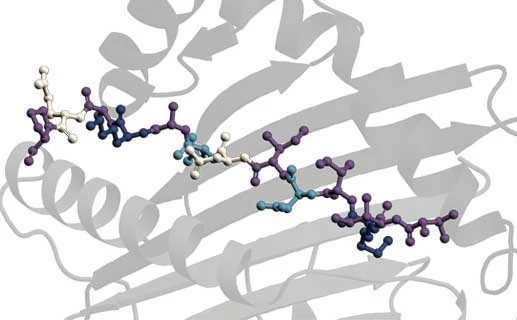
Classical force fields often miss critical interactions. Our FMO platform applies quantum mechanics to quantify residue-level energetics, enabling precise interpretation of electrostatics, charge transfer, and dispersion effects in complex systems.

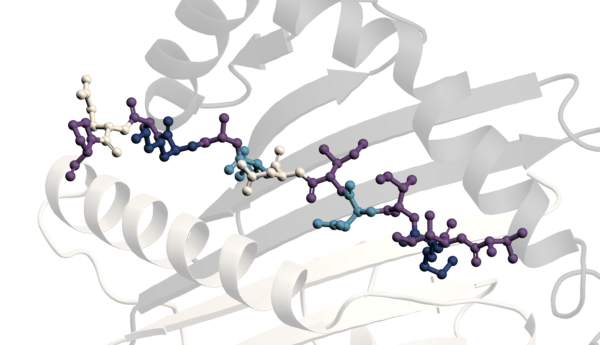
Go beyond static structures. Our MD workflows reveal how targets and ligands behave in motion to assess stability, reveal hidden pockets, and discern interaction patterns. We leverage commercial tools alongside proprietary mixed-solvent and membrane setups to deliver fast, actionable insights to guide smarter molecular design.

We apply homology modeling and AI-based approaches to predict protein structures when experimental data is unavailable, supporting structure-based design even for challenging targets.

Using water-map technology, we identify favorable and unfavorable solvent regions in the binding site. This helps guide functional group placement in a lead compound to enhance potency and selectivity.

We generate protein constructs and obtain X-ray crystallography data for targets lacking structural information. This supports binding mode elucidation and drives structure-based optimization.

We can prioritize design ideas and factor in ligand and/or protein flexibility while utilizing a 3D fully-interactive ligand editor enables real-time optimization within the binding site.
Our comprehensive computational platform harnesses the power of advanced
computational chemistry combining quantum-level insights with cutting-edge
calculations to help you confidently rank compounds, optimize interactions, and
accelerate your drug discovery pipeline.
Our platform integrates commercial and proprietary tools including Non-Equilibrium Switching free energy calculations, Fragment Molecular Orbital analysis, Molecular Dynamics, and flexible docking to deliver deep understanding of binding energetics and interaction patterns.
Our Fragment Molecular Orbital (FMO-SP) approach applies quantum mechanics to dissect residue-level energetics; capturing electrostatics, charge transfer, and dispersion effects that classical force field methods often miss.
Advanced Relative Binding Free Energy (RBFE) calculations using NES methodology on the Orion® platform enable rapid and accurate compound ranking, helping you to prioritize the most promising candidates with confidence.
Resources


We work across diverse target classes, including kinases, GPCRs, ion channels, and systems lacking structural data.
Detailed interaction maps, free energy profiles, MD trajectory analyses, and quantum-level residue energetics, plus
tailored reports and raw data files upon request
We combine industry-leading tools such as Short-Trajectory MD (STMD) and Non-Equilibrium Switching (NES) with
proprietary innovations like Fragment Molecular Orbital FMO and mixed-solvent MD to deliver deeper insights and
drive successful structure-based drug design programs.
We bring together a dynamic blend of new talent and experienced pharmaceutical industry experts from a round the world, delivering excellence across every stage of discovery.

Providing Relative Binding-Free Energy Calculation using Non-Equilibrium Switching (NES) powered by OpenEye’s Orion® platform. Delivering precise binding affinity predictions to help you rank compounds with confidence and prioritize synthesis decisions for the most promising candidates early in the discovery process.
Identifying key interactions isn’t always straightforward. Static models can miss critical dynamics that influence binding and stability. MD simulations allow us to observe targets in motion, uncover hidden interactions, and improve molecular design strategies.
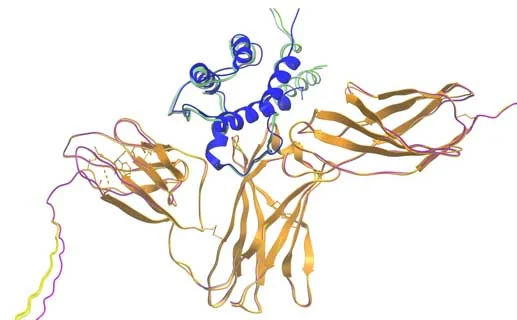
Using advanced AI and proven modelling techniques to predict protein structures with confidence, accelerating structure-based drug design and discovering novel therapeutic
possibilities.
Gain structural insights that guide smarter drug design through cryo-EM, NMR, and X-ray crystallography supported by expert analysis and collaboration.

Comprehensive target class solutions integrate advanced assays, structural biology, and medicinal chemistry to accelerate hit-to-lead and candidate selection.
Main home page for the Protein Science and Structural Biology Department. We take time to understand your target and the ultimate aims of the project and tailor our approach accordingly.
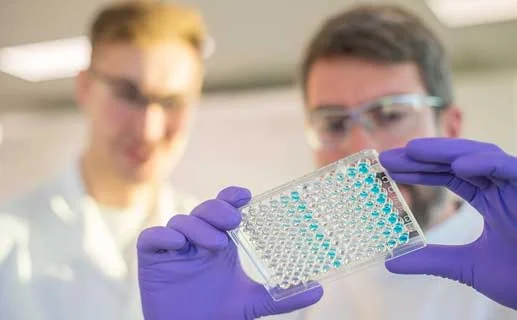
Delivering validated, high-quality hits through integrated technologies, strategic insight, and expert collaboration to advance your program with confidence.
Our Computer Aided Drug Design (CADD) capabilities combine deep scientific expertise with advanced AI, machine learning, and informatics infrastructure to support smarter, faster decision-making across the drug discovery pipeline.
Peak Proteins, NuChem Sciences, and SB Drug Discovery have now fully integrated with Sygnature Discovery.
