


Featured Resources
-
STORM Therapeutics: From Lead to Pre-Candidate Nomination in 18 Months

STORM Therapeutics: From Lead to Pre-Candidate Nomination in 18 Months
Case study
📣From lead to pre-candidate nomination in 18 months. Explore the STORM Therapeutics case study




July 30, 2015

Inobrodib, an exciting, first-in-class oral anti-cancer drug in clinical development by CellCentric, was collaboratively designed, synthesised and supported on its pre-clinical journey by an integrated project team at Sygnature Discovery. Inobrodib is now showing promising results in Phase I and II trials for multiple myeloma and other cancer types.

At Sygnature Discovery, we deliver world-leading drug discovery solutions to accelerate your compound from idea to clinic.

Our leadership team brings diverse experience and insight, driving collaboration and innovation across drug discovery.

Explore careers at Sygnature Discovery and join a global team committed to science, collaboration, and integrity.
Inobrodib, an exciting, first-in-class oral anti-cancer drug in clinical development by CellCentric, was collaboratively designed, synthesised and supported on its pre-clinical journey by an integrated project team at Sygnature Discovery. Inobrodib is now showing promising results in Phase I and II trials for multiple myeloma and other cancer types.
At Sygnature Discovery, we deliver world-leading drug discovery solutions to accelerate your compound from idea to clinic.
Our leadership team brings diverse experience and insight, driving collaboration and innovation across drug discovery.
Explore careers at Sygnature Discovery and join a global team committed to science, collaboration, and integrity.
scientific solutions | DMPK
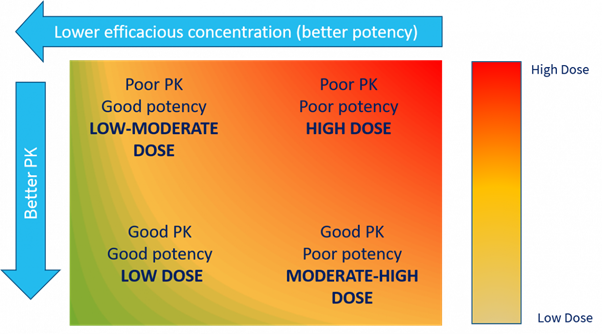
Make confident translational decisions with integrated PK and PK/PD modelling that connects high-quality in vitro and in vivo data to predictive simulations. We help you optimize dose selection, refine study design, and anticipate human exposure-response early reducing attrition and accelerating progression from hit-to-lead through IND-enabling studies and beyond.

supporting your research
Through simulation-based approaches, we translate in vitro potency, selectivity, and safety data into actionable dosing recommendations for pharmacodynamic studies. These models predict exposure–response relationships, identify potential liabilities early, and de-risk compound progression into in vivo studies. Our PK/PD modelling establishes quantitative concentration–effect relationships, enabling the translation of preclinical data into clinically relevant exposure profiles and effective human dosing regimens. This approach supports rational decision-making in candidate selection, formulation development, and clinical trial design.

PBPK modelling integrates physiological parameters, drug-specific properties, and mechanistic ADME knowledge to simulate human pharmacokinetics. These models support in vitro–in vivo extrapolation (IVIVE), prediction of systemic exposure, and first-in-human dose projections, providing a strong simulation-supported rationale for regulatory interactions and clinical planning. Our approach also evaluates drug-drug interaction risk early by simulating a compound’s impact on metabolic enzymes, such as CYPs and UGTs, and transporters, such as P-gp and BCRP. These insights help forecast clinical safety issues and strengthen regulatory submissions.
Our modelling and simulation services support strategic decision-making during in-licensing and out-licensing activities. Mechanistic analysis, PBPK modelling, and PK/PD simulations help assess compound viability and inform investment decisions with scientific rigor. This integrated modelling framework enables confident, data-driven decisions across discovery and development, supports translational success and reduces risk in early-stage drug development.
Sygnature Discovery combines deep scientific expertise with advanced computational capabilities to deliver predictive modelling and simulation solutions that inform decision-making across drug discovery and development. Our strategies integrate in vitro and in vivo data with tools such as PBPK modelling, allometric scaling, and mechanistic simulations to ensure translational relevance.
We specialize in:
By embedding modelling and simulation within an integrated discovery framework, we reduce development risk, enable translational success and accelerate progression to the clinic.

Resource hub


We bring together a dynamic blend of new talent and experienced pharmaceutical industry experts from a round the world, delivering excellence across every stage of discovery.

Integrated solid form and formulation strategies reduce risk, improve stability and solubility, and accelerate progression from candidate selection to clinic.
Validated in vivo models deliver clinically relevant data across therapeutic areas, accelerating confident decisions and reducing risk in drug development.
Peak Proteins, NuChem Sciences, and SB Drug Discovery have now fully integrated with Sygnature Discovery.

