



Featured Resources
-
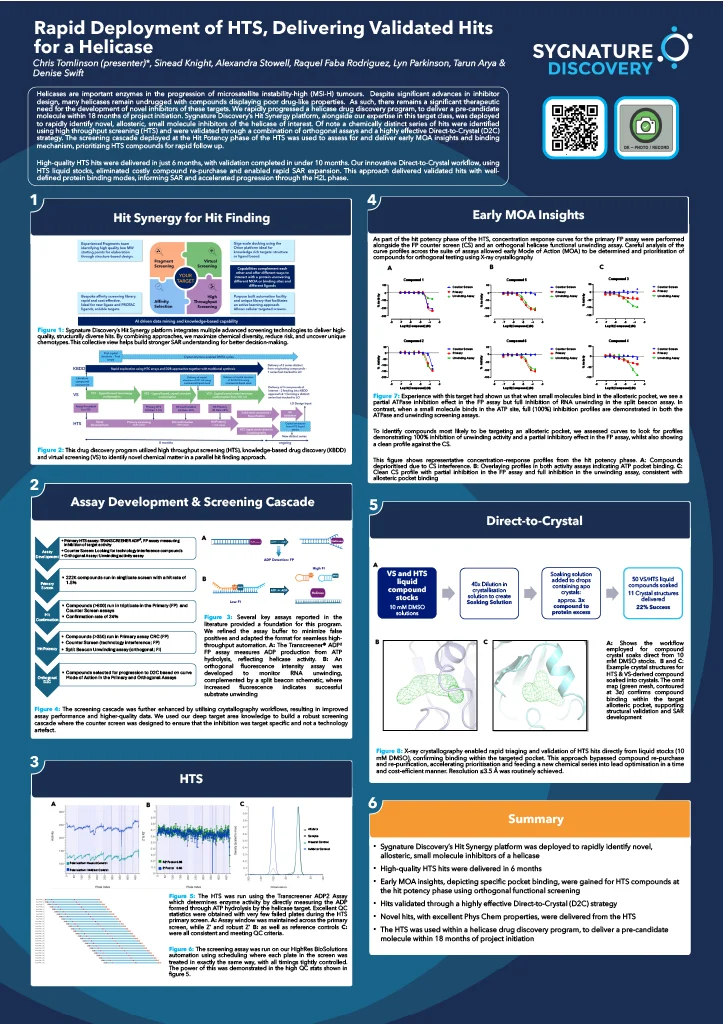
STORM Therapeutics: From Lead to Pre-Candidate Nomination in 18 Months

STORM Therapeutics: From Lead to Pre-Candidate Nomination in 18 Months
Case study
📣From lead to pre-candidate nomination in 18 months. Explore the STORM Therapeutics case study




July 30, 2015

Inobrodib, an exciting, first-in-class oral anti-cancer drug in clinical development by CellCentric, was collaboratively designed, synthesised and supported on its pre-clinical journey by an integrated project team at Sygnature Discovery. Inobrodib is now showing promising results in Phase I and II trials for multiple myeloma and other cancer types.

At Sygnature Discovery, we deliver world-leading drug discovery solutions to accelerate your compound from idea to clinic.

Our leadership team brings diverse experience and insight, driving collaboration and innovation across drug discovery.

Explore careers at Sygnature Discovery and join a global team committed to science, collaboration, and integrity.
Inobrodib, an exciting, first-in-class oral anti-cancer drug in clinical development by CellCentric, was collaboratively designed, synthesised and supported on its pre-clinical journey by an integrated project team at Sygnature Discovery. Inobrodib is now showing promising results in Phase I and II trials for multiple myeloma and other cancer types.
At Sygnature Discovery, we deliver world-leading drug discovery solutions to accelerate your compound from idea to clinic.
Our leadership team brings diverse experience and insight, driving collaboration and innovation across drug discovery.
Explore careers at Sygnature Discovery and join a global team committed to science, collaboration, and integrity.
At Sygnature Discovery, we’re advancing receptor binding assays by utilizing diverse radioligands. Our 5-HT2A receptor screen, employing both agonist and antagonist radioligands, offers insights into receptor pharmacology. Using [3H]Cimbi-36 as an agonist radioligand, we’ve shed light on the differing affinities of psychedelic 5-HT2A agonists. Trust us to optimize your experimental design and enhance the correlation…
![Development and Validation of [3H]Cimbi-36 Binding in Mouse Frontal Cortex Including Affinity Constant Determination for Classical Psychedelics: Comparison to [3H]MDL100,907 Binding](https://www.sygnaturediscovery.com/wp-content/uploads/2025/11/ELRIG-Cimbi-Poster-002-e1744810257939.png)
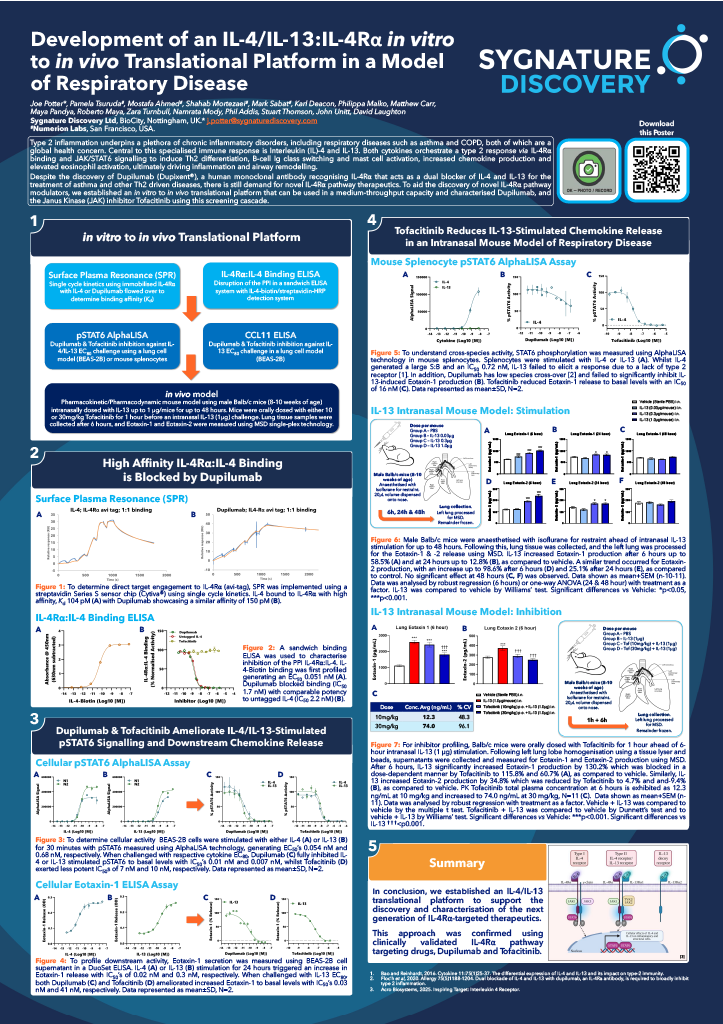
Radioligand choice in competitive binding assays can affect the affinity of a ligand for the receptor.
At Sygnature Discovery, we have validated a receptor binding screen for 5-HT2A receptors utilising agonist and antagonist radioligands, to investigate receptor pharmacology and translate cell binding data to pre-clinical behaviour, DMPK and ex vivo receptor binding.
Antagonists bind to receptors in the active and inactive state whereas agonists only bind to the active state. Cimbi-36 is a potent and selective 5-HT2A agonist, commonly used in PET imaging studies. Sygnature Discovery has developed a radioligand binding assay using [3H]Cimbi-36 to label 5-HT2A receptors in the mouse frontal cortex. We have demonstrated that the affinity of some psychedelic 5-HT2A agonists differs when using an agonist or antagonist radioligand. Sygnature Discovery can advise on experimental design so that each stage of drug discovery complements the next and ensures in vitro data can be correlated with behavioural models.
Processing…
Thank you! Your download will begin shortly.


Peak Proteins, NuChem Sciences, and SB Drug Discovery have now fully integrated with Sygnature Discovery.
