


Featured Resources
-
STORM Therapeutics: From Lead to Pre-Candidate Nomination in 18 Months

STORM Therapeutics: From Lead to Pre-Candidate Nomination in 18 Months
Case study
📣From lead to pre-candidate nomination in 18 months. Explore the STORM Therapeutics case study




July 30, 2015

Inobrodib, an exciting, first-in-class oral anti-cancer drug in clinical development by CellCentric, was collaboratively designed, synthesised and supported on its pre-clinical journey by an integrated project team at Sygnature Discovery. Inobrodib is now showing promising results in Phase I and II trials for multiple myeloma and other cancer types.

At Sygnature Discovery, we deliver world-leading drug discovery solutions to accelerate your compound from idea to clinic.

Our leadership team brings diverse experience and insight, driving collaboration and innovation across drug discovery.

Explore careers at Sygnature Discovery and join a global team committed to science, collaboration, and integrity.
Inobrodib, an exciting, first-in-class oral anti-cancer drug in clinical development by CellCentric, was collaboratively designed, synthesised and supported on its pre-clinical journey by an integrated project team at Sygnature Discovery. Inobrodib is now showing promising results in Phase I and II trials for multiple myeloma and other cancer types.
At Sygnature Discovery, we deliver world-leading drug discovery solutions to accelerate your compound from idea to clinic.
Our leadership team brings diverse experience and insight, driving collaboration and innovation across drug discovery.
Explore careers at Sygnature Discovery and join a global team committed to science, collaboration, and integrity.
scientific solutions | Form & Formulation
Early insights into solid-state properties can shape the entire development journey of your candidate molecule. Our goal is to foster meaningful discussions that help de-risk your compound’s physical form, ensuring a smoother path from discovery to clinic.

SUPPORTING YOUR RESEARCH
Whether you’re screening early batches or resolving variability in retrospective data, we tailor our characterization to your project’s stage and material constraints.
Understanding the solid form properties of a material can significantly impact other studies. For instance, small-scale batches from chiral SFC might be amorphous and dissolve readily, but process chemistry and scale-up could produce a crystalline form, reducing solubility by up to tenfold. This can lead to inconsistent PK profiles, complicating early data interpretation and affecting in vivo performance.
Monitoring batch-to-batch variability and selecting a stable form early helps avoid formulation-related inconsistencies, ensures reproducibility across studies, and reduces the risk of late-stage setbacks. It lays the foundation for reliable dose escalation and robust safety assessments.

The solid form of a drug candidate is more than just physical state – it’s a key driver of success. Whether crystalline, amorphous, or salt form, each variant can dramatically influence solubility, bioavailability, stability, and manufacturability. These properties affect how the drug behaves in vivo, how it’s formulated, and how reliably it performs across batches.
Early solid form analysis helps uncover risks before they become costly setbacks. It improves interpretation of PK data, supports consistent exposure, and guides formulation strategy. By understanding and controlling solid-state properties from the outset, you set the stage for a more efficient and reliable development journey.

Core Solid Form Analytical Techniques
We offer a tiered approach to solid form characterization, scaling from minimal screening to comprehensive evaluation based on your program needs and available material.
Determine whether the sample is crystalline or amorphous and confirm consistency with previous batches. Useful for identifying form changes in the drug and excipients.
Assess thermal stability, hydration and solvation levels, and surface-bound volatiles.
Establish melting point and glass transition (Tg); evaluate polymorphic interconversion and enantiotropic/monotropic relationships.
Characterize hygroscopicity, hydrate formation and dehydration, and the kinetics of change across humidity conditions.
Examine morphology and particle size distribution; support confirmation of crystallinity.
Resources


Investing in solid form analysis prior to lead candidate selection may appear premature, but it is often a strategically sound decision. At this stage of development, multiple promising molecules are typically under evaluation, and understanding their solid-state behavior can serve as a critical differentiator. Early insights into properties such as solubility, stability, and manufacturability enable prioritization of candidates that are not only pharmacologically effective but also viable for development. Additionally, early analysis can identify potential risks, such as poor crystallinity or polymorphic instability, that may hinder progress later in the pipeline. By incorporating solid form analysis early, you mitigate the risk of selecting a molecule that performs well in theory but fails during formulation or scale-up, ultimately saving time, cost, and resources downstream.
We bring together a dynamic blend of new talent and experienced pharmaceutical industry experts from a round the world, delivering excellence across every stage of discovery.
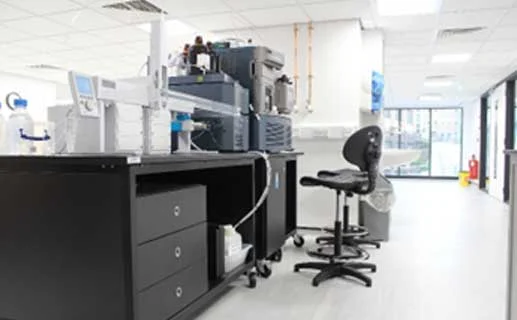
Integrated DMPK solutions combining advanced assays, modeling, and bioanalysis delivering predictive insights that reduce risk and guide candidate selection.
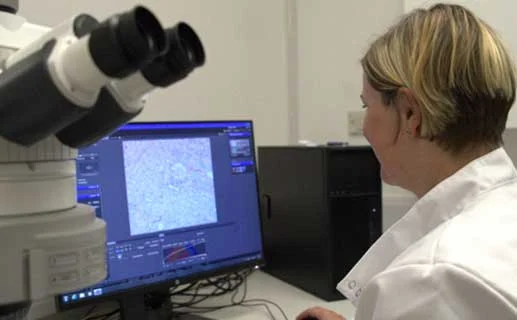
Validated in vivo models deliver clinically relevant data across therapeutic areas, accelerating confident decisions and reducing risk in drug development.

Peak Proteins, NuChem Sciences, and SB Drug Discovery have now fully integrated with Sygnature Discovery.

