


Featured Resources
-
STORM Therapeutics: From Lead to Pre-Candidate Nomination in 18 Months

STORM Therapeutics: From Lead to Pre-Candidate Nomination in 18 Months
Case study
📣From lead to pre-candidate nomination in 18 months. Explore the STORM Therapeutics case study




July 30, 2015

Inobrodib, an exciting, first-in-class oral anti-cancer drug in clinical development by CellCentric, was collaboratively designed, synthesised and supported on its pre-clinical journey by an integrated project team at Sygnature Discovery. Inobrodib is now showing promising results in Phase I and II trials for multiple myeloma and other cancer types.

At Sygnature Discovery, we deliver world-leading drug discovery solutions to accelerate your compound from idea to clinic.

Our leadership team brings diverse experience and insight, driving collaboration and innovation across drug discovery.

Explore careers at Sygnature Discovery and join a global team committed to science, collaboration, and integrity.
Inobrodib, an exciting, first-in-class oral anti-cancer drug in clinical development by CellCentric, was collaboratively designed, synthesised and supported on its pre-clinical journey by an integrated project team at Sygnature Discovery. Inobrodib is now showing promising results in Phase I and II trials for multiple myeloma and other cancer types.
At Sygnature Discovery, we deliver world-leading drug discovery solutions to accelerate your compound from idea to clinic.
Our leadership team brings diverse experience and insight, driving collaboration and innovation across drug discovery.
Explore careers at Sygnature Discovery and join a global team committed to science, collaboration, and integrity.
scientific solutions | computer aided drug design
Helping you design and optimize ternary complexes with precision, combining advanced modeling and collaborative expertise, making previously “undruggable” targets tractable.

supporting your research
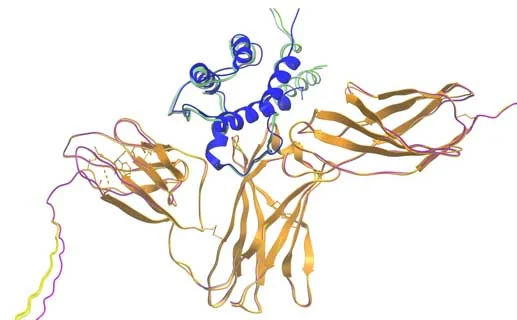
This capability addresses one of the hardest challenges in drug discovery, modulating disease-relevant proteins that lack conventional binding pockets or enzymatic activity. Through Targeted Protein Degradation (TPD) strategies, we can make previously “undruggable” targets tractable. Our TPD capabilities span both PROTACs and Molecular Glue degraders.
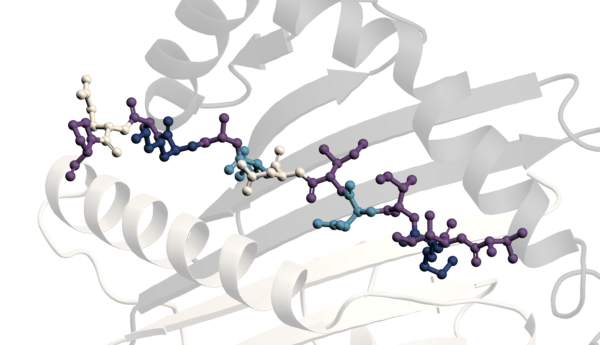
With over 14 years of experience in computational drug design, Sygnature leads in modelling and simulation for bifunctional degraders. Our scientists are committed to advancing and refining computational workflows that enable precise construction, simulation, and evaluation of both established and novel multicomponent assemblies. Our workflows cover everything from concept generation and ternary complex modelling to structural refinement, energetics evaluation, and degrader ranking, guided by detailed knowledge of binding epitopes and interaction interfaces.

We harness a suite of advanced technologies and proprietary platforms to drive molecular glue discovery and optimization:
• Molecular dynamics (MD) simulations
• Protein-protein docking
• Ligand-based virtual screening
• Industry leading tools: Orion, MolSoft ICM, MOE, Gamess
• Proprietary FMO Protein-Protein Interface FMO-PPI Sygnature Platform
• AI-guided generative design and multi-parametric QSPR modelling to refine chemical matter and predict degradation efficiency.
These tools enable precise modelling of ternary complexes, prediction of binding cooperativity, residue-level interactions, and electrostatic complementarity mapping.
By combining structural biology, cheminformatics, and machine learning, we help clients overcome challenges in selectivity, potency, and mechanistic validation, bridging in silico design with in vitro success.
To enable the precise design of bifunctional and monovalent degraders, our capabilities include:
• Fast follower linker and glue optimization
• Virtual screening for derisking and diversification of chemotypes of known glues
• Advanced ternary complex modelling and post-processing
• AI-driven glue design
• Predictive degradation profiling using Sygnature’s Fragmented Molecular Orbital at Protein-Protein Interface (FMO-PPI platform and Molecular Dynamics (MD)
While PROTACs and Molecular Glues (MGs) introduce complex design and data interpretation challenges, Sygnature’s integrated approach combines structure-based modeling, quantum-mechanical (QM) level interaction analysis, and AI-guided optimization to deliver predictive insights and validated strategies that accelerate discovery and reduce risk.
Our proprietary CHARMED platform and advanced modeling workflows enable rational design of PROTACs and Molecular Glues (MGs), tackling challenges such as selectivity, cooperativity, and degradation efficiency. These approaches extend the reach of therapeutic development into previously undruggable target classes, representing a major advancement in precision medicine.
We blend extensive scientific expertise with cutting-edge technology to accelerate your drug discovery goals. Our strength lies in cross-functional collaboration from fully integrated and collocated support across medicinal chemistry, bioscience, DMPK, and computational modelling. Utilizing data- driven insights, we guide every stage of discovery while working closely with our partners to tailor solutions to their specific targets.
Using our proprietary CHARMED platform, we enhance early-stage TPD programs with high-throughput synthesis and screening. This approach is tightly coupled with advanced computational workflows to streamline degrader design and validation.

Resource hub


We help you design smarter compounds and make faster decisions by combining AI- powered modeling, extensive scientific expertise, and secure, collaborative data access to solve complex challenges and accelerate your drug discovery journey.
Using advanced AI and proven modelling techniques to predict protein structures with confidence, accelerating structure-based drug design and discovering novel therapeutic
possibilities.

Providing Relative Binding-Free Energy Calculation using Non-Equilibrium Switching (NES) powered by OpenEye’s Orion® platform. Delivering precise binding affinity predictions to help you rank compounds with confidence and prioritize synthesis decisions for the most promising candidates early in the discovery process.

Utilizing cutting-edge technologies and proprietary software to uncover hidden interactions, predict ligand stability, and make confident design choices that accelerate your drug discovery program.

Combining AI-driven design, bespoke ML models and LLM-powered bioinformatics with hands-on collaboration to help you discover Optimized drug candidates faster.

Identifying high-quality hits fast through giga-scale virtual screening, curated libraries, and expert triaging to accelerate drug discovery programs.

From binding sites to druggability, our computational chemistry and protein science teams help you find the right starting points faster, combining structural insight with cutting-edge tools to design compounds that move your project forward with confidence.

Leveraging the properties of known active molecules to rapidly generate and optimize new compounds through ligand-driven insights, AI-powered tools, and collaborative expertise to uncover new chemical space and accelerate discovery.

Helping you design better compounds with greater confidence. Utilizing quantum-level insights and dynamic simulations we predict affinity, guide optimization, and help you prioritize the right candidates faster.
We apply advanced computational modelling to a wide range of targets, including kinases, transcription factors, scaffold proteins, epigenetic regulators, nuclear receptors, neurodegenerative disease targets, and E3 ligases. Our expertise spans both well-characterized and traditionally “undruggable” proteins.
Our modelling supports PROTACs, Molecular Glues, peptide-based degraders, and other heterobifunctional degraders. These approaches enable selective degradation of disease-relevant proteins using diverse mechanisms. Our modelling workflows are designed to support each modality by predicting ternary complex formation with known binding epitopes, guiding linker and glue design, and evaluating degradation potential.
We provide tailored workflows including structure-based virtual screening, conformational analysis with clustering, post-processing of ternary assemblies, and residue level energetics-based ranking using Sygnature’s FMO-PPI platform and MD pipelines to prioritise degrader candidates. These workflows are integrated with experimental platforms including CHARMED for rapid iteration and data-driven decisions.
We provide comprehensive scientific reports that include modelled ternary complex structures in preferred formats, ranked degrader poses with clustering analysis, and detailed interaction maps with residue-level insights such as FMO-PPI-SP. Reports are typically delivered in CSV or other accessible formats and include expert design recommendations, validation metrics, and full computational rationales.
Also included are clear visual summaries such as interaction diagrams and boundary surface representations to ensure transparency, traceability, and actionable insights throughout the degrader development process.
To accurately model ternary complexes for novel PROTACs and molecular glues, we require a well -defined set of inputs that enable precise computational analysis. These typically include structural and mechanistic information on the protein of interest (POI) and the recruiter protein or E3 ligase, known or hypothetical binding epitopes and key interface residues.
Preliminary degradation assay data or experimental results, if available, are highly valuable for validating modelling outcomes. We also request details on linker chemistry, binding motifs, and any known mutations that may influence complex formation and stability. Structural data such as crystallographic models, cryo-EM maps, or homology models are essential for refining simulations and tailoring our computational workflows to the specific biological system under investigation.
Peak Proteins, NuChem Sciences, and SB Drug Discovery have now fully integrated with Sygnature Discovery.


