


Featured Resources
-
STORM Therapeutics: From Lead to Pre-Candidate Nomination in 18 Months

STORM Therapeutics: From Lead to Pre-Candidate Nomination in 18 Months
Case study
📣From lead to pre-candidate nomination in 18 months. Explore the STORM Therapeutics case study




July 30, 2015

Inobrodib, an exciting, first-in-class oral anti-cancer drug in clinical development by CellCentric, was collaboratively designed, synthesised and supported on its pre-clinical journey by an integrated project team at Sygnature Discovery. Inobrodib is now showing promising results in Phase I and II trials for multiple myeloma and other cancer types.

At Sygnature Discovery, we deliver world-leading drug discovery solutions to accelerate your compound from idea to clinic.

Our leadership team brings diverse experience and insight, driving collaboration and innovation across drug discovery.

Explore careers at Sygnature Discovery and join a global team committed to science, collaboration, and integrity.
Inobrodib, an exciting, first-in-class oral anti-cancer drug in clinical development by CellCentric, was collaboratively designed, synthesised and supported on its pre-clinical journey by an integrated project team at Sygnature Discovery. Inobrodib is now showing promising results in Phase I and II trials for multiple myeloma and other cancer types.
At Sygnature Discovery, we deliver world-leading drug discovery solutions to accelerate your compound from idea to clinic.
Our leadership team brings diverse experience and insight, driving collaboration and innovation across drug discovery.
Explore careers at Sygnature Discovery and join a global team committed to science, collaboration, and integrity.
scientific solutions | Chemistry
Our Direct‑to‑Discovery platform accelerates Hit‑to‑Lead by generating biological, structural, and key DMPK data directly from crude reaction mixtures (CRMs), bypassing purification. By extending Direct‑to‑Biology (D2B) with broader data generation at the same early stage, it enables faster, more confident, and more cost‑effective decision‑making.

supporting your research
Our approach, Direct‑to‑Discovery, extends this even further, integrating not just chemistry and biology, but also DMPK and structural biology earlier into the process.
Harnessing the expertise of our high-throughput chemistry team, we reliably identify and validate assay compliant conditions across diverse reaction types. Coupled with our deep understanding of assay endpoints for CRMs, we deliver data that accelerates early decision making and drives compound progression.
Standard D2B workflows often focus primarily on affinity or efficacy measurements from CRMs, overlooking the broader value of this rich data source. To unlock this potential, we have expanded the approach through integrated methods, including Direct-to-Crystallography (D2C) and Direct–to-Physiochemistry and DMPK (D2DMPK), providing molecular level binding insight and detailed SAR directly from CRMs.
Feeding all this information into machine learning models completes the DMTA cycle and supports the use of AI to design future modifications.

At Sygnature, we take a connected approach to compound optimisation, breaking down disciplinary silos to deliver better outcomes for our customers. This collaboration is essential for Direct‑to‑Biology, where understanding the composition of a CRM, and how it influences assay readouts, is critical for selecting the most appropriate chemistry and target dependant endpoint.
The same forensic mindset underpins our Direct‑to‑Crystallography (D2C) and Direct‑to‑Physiochemistry and DMPK (D2DMPK) approaches. By integrating expertise across functions, we generate high‑quality data with both speed and precision.
The value of these techniques hinges on recognising when to apply this strategy as well as designing well‑targeted libraries.
Our teams combine medicinal chemistry knowledge with AI and ML to craft compound sets that deliver decision‑making insights. These insights drive better compound design and faster progress toward pre‑clinical candidate delivery.
These capabilities work together to form our broader Direct‑to‑Discovery model, which unites not only chemistry and biology but also structural biology and DMPK for a more connected discovery process.
Reactions designed for bioassey compatibility from the outset.
96- and 384-well formats feeding directly into screening workflows.
biochemical, biophysical, and cellular assays set up to handle crude or minimally purified material when appropriate
D2C workflows that refine SAR with speed and accuracy.
D2DMPK to inform on metabolic stability and further rank compounds.
Connecting straight into our CHARMED platform for molecular glue and PROTAC design.
Fragment-based Drug Discovery – Integrating D2B and D2C to accelerate the identification of novel protein binders.
Early hit expansion – A data‑intensive phase of drug discovery where the rapid generation of SAR using D2B can be exceptionally powerful.
Rapid SAR generation during Hit to Lead or Lead Optimization – Enables fast, efficient use of resources and accelerates optimisation at any stage of the programme.
Targeted protein degradation – Provides the throughput needed to uncover new molecular glues and PROTACs, which are challenging to design using traditional methods.
Our Direct-to-Discovery platform isn’t just about going faster; it’s about changing the cadence of discovery. When chemical synthesis, biological testing, structural information and DMPK profiling run essentially in parallel:
The result: weeks compressed into days, and SAR intelligence generated in near real-time.

Resources


We bring together a dynamic blend of new talent and experienced pharmaceutical industry experts from a round the world, delivering excellence across every stage of discovery.

Global chemistry expertise and tailored strategies combining medicinal, synthetic, and process capabilities advancing candidate-quality molecules with transparent collaboration.
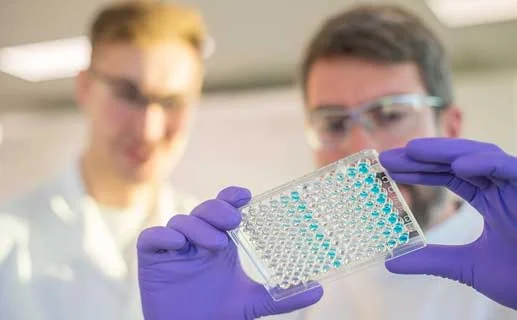
Delivering validated, high-quality hits through integrated technologies, strategic insight, and expert collaboration to advance your program with confidence.

Transforming early leads into clinical-quality candidates through integrated expertise, rapid decision-making, and optimized strategies for safety, potency, and exposure.
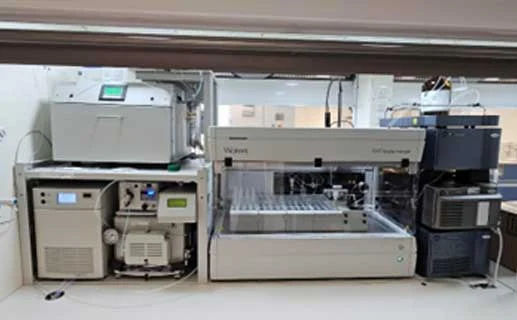
Automated high-throughput chemistry delivering rapid, high-quality compound libraries enabling efficient SAR exploration and faster progression from concept to candidate.

Tailored bioscience solutions combining advanced technologies and collaborative expertise to design robust assays and accelerate confident drug discovery decisions.
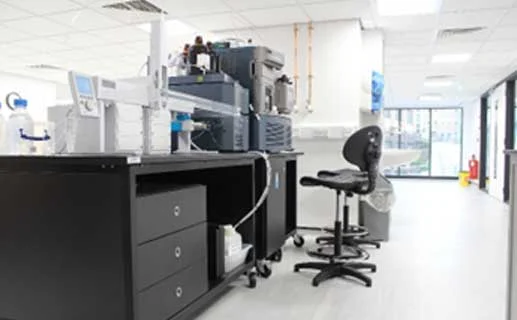
Integrated DMPK solutions combining advanced assays, modeling, and bioanalysis delivering predictive insights that reduce risk and guide candidate selection.

Targeted Protein Degradation (TPD) is an innovative drug discovery approach focused on previously considered ‘undruggable’ proteins. TPD leverages the cell’s ubiquitin-proteasome system to tag these ‘undruggable’ proteins for degradation.
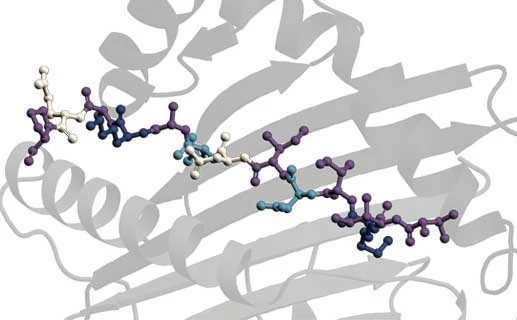
Main home page for the Protein Science and Structural Biology Department. We take time to understand your target and the ultimate aims of the project and tailor our approach accordingly.
Peak Proteins, NuChem Sciences, and SB Drug Discovery have now fully integrated with Sygnature Discovery.

