


Featured Resources
-
STORM Therapeutics: From Lead to Pre-Candidate Nomination in 18 Months

STORM Therapeutics: From Lead to Pre-Candidate Nomination in 18 Months
Case study
📣From lead to pre-candidate nomination in 18 months. Explore the STORM Therapeutics case study




July 30, 2015

Inobrodib, an exciting, first-in-class oral anti-cancer drug in clinical development by CellCentric, was collaboratively designed, synthesised and supported on its pre-clinical journey by an integrated project team at Sygnature Discovery. Inobrodib is now showing promising results in Phase I and II trials for multiple myeloma and other cancer types.

At Sygnature Discovery, we deliver world-leading drug discovery solutions to accelerate your compound from idea to clinic.

Our leadership team brings diverse experience and insight, driving collaboration and innovation across drug discovery.

Explore careers at Sygnature Discovery and join a global team committed to science, collaboration, and integrity.
Inobrodib, an exciting, first-in-class oral anti-cancer drug in clinical development by CellCentric, was collaboratively designed, synthesised and supported on its pre-clinical journey by an integrated project team at Sygnature Discovery. Inobrodib is now showing promising results in Phase I and II trials for multiple myeloma and other cancer types.
At Sygnature Discovery, we deliver world-leading drug discovery solutions to accelerate your compound from idea to clinic.
Our leadership team brings diverse experience and insight, driving collaboration and innovation across drug discovery.
Explore careers at Sygnature Discovery and join a global team committed to science, collaboration, and integrity.
scientific solutions | CAAD
By combining advanced computational techniques with early-stage chemistry expertise, we design synthesis-ready compound libraries that speed up hit discovery, give you a competitive edge in novelty, and help you move from concepts to viable leads more efficiently.

library design
Our proprietary 8-million-compound in silico library is optimized for high-through put virtual screening and real-world synthesis.
Every library entry is carefully curated using strict physicochemical property filters and excludes compounds with unsuitable functionalities from commercial sources, ensuring synthetic feasibility and drug-like properties. This strategic approach accelerates synthesis in our High Throughput Chemistry (HTC) lab, enabling rapid Structure-Activity Relationship (SAR) investigations across multiple discovery phases and paving the way for innovative structures in lead optimization. For projects requiring novelty, we design custom libraries enriched for specific target classes and IP-space coverage, helping you explore chemical space strategically and gain a competitive edge.
Methods for Compound Library Design :
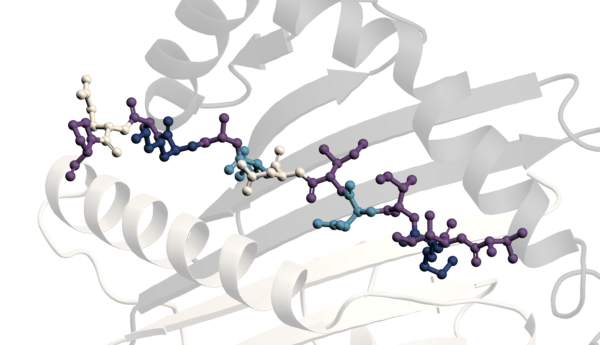
We use in silico approaches to design focused arrays of compounds for parallel synthesis. Starting with curated reagent sets, we enumerate compounds accessible through current chemistry and prioritize them for synthesis using:
– Clustering
– Filtering based on desired properties
– Docking sores
– Pharmacophore fit
We can also design libraries to cover intellectual property space, giving you an edge in novelty and patentability.

Designing Diverse, High-Quality
Compound Libraries to Accelerate
Discovery

For more targeted compound library design, we provide specialized project-specific libraries for both in vitro and in silico screening. These libraries are enriched with chemotypes likely to show activity against selected target classes, as well as compounds with the desired properties and functionalities for your program.

Our significant contribution to the European Lead Factory (ELF) includes a library of novel cores synthesized in-house. These cores provide distinct, synthetically feasible starting points for virtual screening or scaffold hopping.

We apply physicochemical property filters, fingerprint clustering, and diversity analysis to curate and enhance our proprietary fragment library, ensuring high quality for fragment-based approaches.

Computational chemistry supports hit finding by analyzing in vitro screening results, identifying promising series for progression through clustering and profiling.
Partnering with Sygnature for library design gives you accelerated hit discovery, high-quality and diverse libraries optimized for synthetic feasibility, and customized, project-specific solutions that enhance novelty, target-class relevance, and IP-space coverage.
Our optimised propriety libraries, combined with HTC’s rapid synthesis capabilities, shorten timelines for identifying and validating promising compounds.
We apply stringent physicochemical filters and diversity analysis, ensuring libraries are not only broad but synthetically feasible: Designing libraries that translate efficiently into viable leads.
Unlike generic libraries, our project-specific designs incorporate IP-space coverage and target-class enrichment, giving clients a competitive edge in novelty and patentability.
Resources


Our 8-million-compound library is curated for diversity and synthetic feasibility, enabling efficient virtual screening and SAR studies. We apply rigorous physicochemical property filters and eliminate compounds with problematic functionalities, ensuring every entry is synthetically feasible and relevant to drug-like space. This ensures your virtual screening campaigns start with a library that is both diverse and practical, reducing wasted computational effort and accelerating hit identification.
Yes. We specialize in creating project-specific libraries enriched with chemotypes predicted to interact with your target class. Using advanced computational techniques such as pharmacophore modelling, docking, and clustering, we tailor libraries to maximize relevance and novelty. This targeted approach helps you explore chemical space strategically, improving the likelihood of discovering differentiated hits .
Our design process starts with curated reagent sets and applies synthetic accessibility filters, ensuring compounds can be made with current chemistry. By prioritizing compounds through docking scores, clustering, and property-based filtering, we deliver libraries that are innovative and practical for rapid synthesis in our High Throughput Chemistry lab, minimizing delays and enabling faster SAR cycles.
We bring together a dynamic blend of new talent and experienced pharmaceutical industry experts from a round the world, delivering excellence across every stage of discovery.
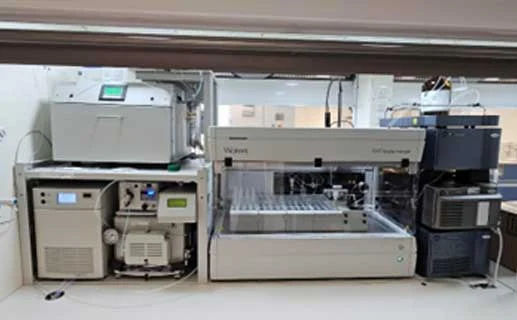
Automated high-throughput chemistry delivering rapid, high-quality compound libraries enabling efficient SAR exploration and faster progression from concept to candidate.

From high -quality starting points to optimized leads, we unite fragment screening, structural biology, computational chemistry and medicinal chemistry to keep your program moving forward .
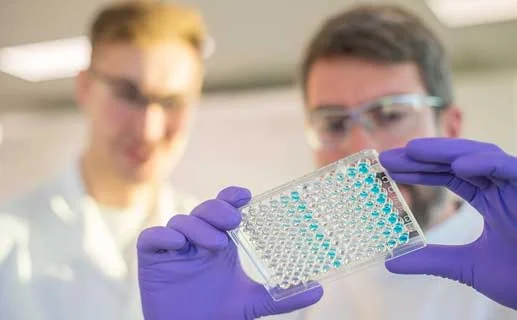
Delivering validated, high-quality hits through integrated technologies, strategic insight, and expert collaboration to advance your program with confidence.

Integrated hit identification using HTS, fragment screening, and advanced automation delivering high-quality starting points for successful drug discovery.
Our Computer Aided Drug Design (CADD) capabilities combine deep scientific expertise with advanced AI, machine learning, and informatics infrastructure to support smarter, faster decision-making across the drug discovery pipeline.
Peak Proteins, NuChem Sciences, and SB Drug Discovery have now fully integrated with Sygnature Discovery.
