


Featured Resources
-
STORM Therapeutics: From Lead to Pre-Candidate Nomination in 18 Months

STORM Therapeutics: From Lead to Pre-Candidate Nomination in 18 Months
Case study




Discover precise insights into brain neurochemistry with Sygnature Discovery's in vivo microdialysis and cOFM services. With over 20 years of expertise, we design bespoke studies that reveal how compounds modulate neurotransmitter systems in health and disease. Using UHPLC/HPLC with electrochemical detection or mass spectrometry, we deliver robust PK/PD data to support confident CNS decision making.


July 30, 2015

Inobrodib, an exciting, first-in-class oral anti-cancer drug in clinical development by CellCentric, was collaboratively designed, synthesised and supported on its pre-clinical journey by an integrated project team at Sygnature Discovery. Inobrodib is now showing promising results in Phase I and II trials for multiple myeloma and other cancer types.

In drug discovery, generating targets is no longer the challenge. The real question is how to identify the few worth investing months of research and significant resources to pursue. Hear expert perspectives on how AI, pathway analysis and scientific expertise are shaping modern target identification.
July 7, 2026
Stay up to date with the latest company updates, milestones, and announcements.
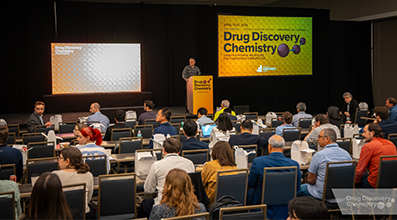
Explore upcoming conferences and scientific meetings where you can connect with our team.

At Sygnature Discovery, we deliver world-leading drug discovery solutions to accelerate your compound from idea to clinic.

Our leadership team brings diverse experience and insight, driving collaboration and innovation across drug discovery.

Explore careers at Sygnature Discovery and join a global team committed to science, collaboration, and integrity.
Inobrodib, an exciting, first-in-class oral anti-cancer drug in clinical development by CellCentric, was collaboratively designed, synthesised and supported on its pre-clinical journey by an integrated project team at Sygnature Discovery. Inobrodib is now showing promising results in Phase I and II trials for multiple myeloma and other cancer types.
At Sygnature Discovery, we deliver world-leading drug discovery solutions to accelerate your compound from idea to clinic.
Our leadership team brings diverse experience and insight, driving collaboration and innovation across drug discovery.
Explore careers at Sygnature Discovery and join a global team committed to science, collaboration, and integrity.
scientific solutions | Computer Aided Drug Design
Using advanced AI and proven modeling techniques to predict protein structures with confidence, accelerating structure-based drug design and discovering novel therapeutic possibilities.

supporting your research
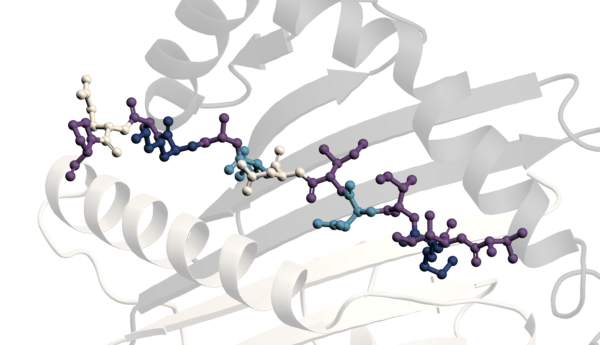
AI-driven advances such as AlphaFold now deliver highly accurate 3D models directly from sequence data, giving researchers new hypothetical insights for novel targets.
At Sygnature Discovery, we leverage a suite of complementary tools including AlphaFold Multimer, OmegaFold, and are currently evaluating Boltz-2 on our internal cluster, to generate high-confidence structural predictions. These models support every stage of drug discovery, from guiding ligand design to providing templates for molecular replacement in protein crystallography when solving novel
structures.
By combining advanced algorithms with extensive drug discovery expertise, we translate these predictions into actionable strategies that accelerate progress and reduce risk.

AlphaFold enables accurate 3D modeling from sequence data. AlphaFold 2.0 marked a breakthrough for modelling non-membrane bound proteins and single protein domains, while AlphaFold Multimer extended capabilities to protein-protein interactions. Confidence scores for different regions make these models highly informative for drug discovery. Open-source tools such as Boltz-2 have further expanded possibilities, also supporting small-molecule affinity prediction and providing a complementary input to our structure-based design workflows.
Alongside new tools for protein structure prediction, homology modelling remains an important and versatile tool. This is particularly important where a selected functional state or protein conformation is sought such as an agonist bound GPCR model or a kinase in the DFG-out form and with a particular αC-helix or activation loop positioning.
Protein structure prediction also supports protein crystallography by offering templates for molecular replacement when solving novel structures.
Core strengths in leveraging structural data and assessing its utility are crucial. One example as to why this is important can be seen using a model of LSD1 which was generated using AlphaFold Multimer. While an excellent model of the binding site is achieved, the binding site is auto inhibited by a separate region of the protein. There is no evidence that this is a physically meaningful effect, and the structure has to be modified to remove this prior to use in drug design.
With a long track record of successful protein structure prediction across diverse targets, Sygnature unites cutting-edge modeling with extensive drug discovery experience. We offer a full suite of tools for protein structure prediction, protein-ligand and protein-protein complex modeling, and structure-guided drug design.
Sygnature’s expertise lies in rigorously evaluating model quality and applying structural insights effectively to support drug discovery. Whether starting from homology models or AlphaFold-type predictions, we assess models in context, considering function al homologues, SAR consistency, and physiological conditions. Our teams refine and assess structures within their broader biological and chemical context to ensure they are truly fit for decision-making.
This capability is strengthened by our large, collocated team of computational chemistry and bioscience experts, who work seamlessly with multidisciplinary project teams to leverage predicted and experimental structural data effectively. With no internal drug programs, our sole focus is your success, providing dedicated expertise, outcome-focused insights, and structural modelling that drives drug discovery projects forward.

Resource hub




We help you design smarter compounds and make faster decisions by combining AI- powered modeling, extensive scientific expertise, and secure, collaborative data access to solve complex challenges and accelerate your drug discovery journey.
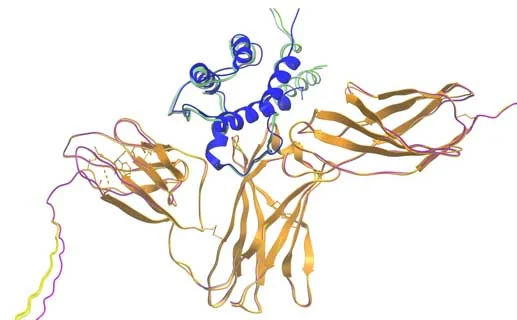
Using advanced AI and proven modelling techniques to predict protein structures with confidence, accelerating structure-based drug design and discovering novel therapeutic
possibilities.

Providing Relative Binding-Free Energy Calculation using Non-Equilibrium Switching (NES) powered by OpenEye’s Orion® platform. Delivering precise binding affinity predictions to help you rank compounds with confidence and prioritize synthesis decisions for the most promising candidates early in the discovery process.

Utilizing cutting-edge technologies and proprietary software to uncover hidden interactions, predict ligand stability, and make confident design choices that accelerate your drug discovery program.

Combining AI-driven design, bespoke ML models and LLM-powered bioinformatics with hands-on collaboration to help you discover Optimized drug candidates faster.

Identifying high-quality hits fast through giga-scale virtual screening, curated libraries, and expert triaging to accelerate drug discovery programs.

From binding sites to druggability, our computational chemistry and protein science teams help you find the right starting points faster, combining structural insight with cutting-edge tools to design compounds that move your project forward with confidence.

Leveraging the properties of known active molecules to rapidly generate and optimize new compounds through ligand-driven insights, AI-powered tools, and collaborative expertise to uncover new chemical space and accelerate discovery.

Helping you design better compounds with greater confidence. Utilizing quantum-level insights and dynamic simulations we predict affinity, guide optimization, and help you prioritize the right candidates faster.
We apply structure prediction and design across multiple protein families and therapeutic areas.
We evaluate models against structural and functional homologues, their consistency with known SAR data, and physiological context, including cellular or tissue compartment pH, and the role of cofactors and metal ions.
No. Experimental structures remain essential for confidence and fine detail. Where feasible, high-resolution data in complex with lead compounds significantly improves efficiency and success rates of the drug discovery project.
Peak Proteins, NuChem Sciences, and SB Drug Discovery have now fully integrated with Sygnature Discovery.


