



Featured Resources
-
STORM Therapeutics: From Lead to Pre-Candidate Nomination in 18 Months

STORM Therapeutics: From Lead to Pre-Candidate Nomination in 18 Months
Case study


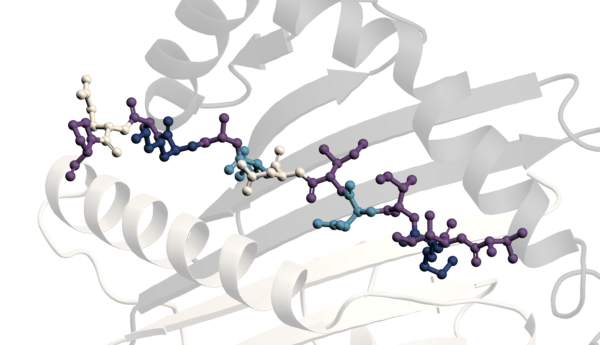


Discover precise insights into brain neurochemistry with Sygnature Discovery's in vivo microdialysis and cOFM services. With over 20 years of expertise, we design bespoke studies that reveal how compounds modulate neurotransmitter systems in health and disease. Using UHPLC/HPLC with electrochemical detection or mass spectrometry, we deliver robust PK/PD data to support confident CNS decision making.


July 30, 2015

Inobrodib, an exciting, first-in-class oral anti-cancer drug in clinical development by CellCentric, was collaboratively designed, synthesised and supported on its pre-clinical journey by an integrated project team at Sygnature Discovery. Inobrodib is now showing promising results in Phase I and II trials for multiple myeloma and other cancer types.

In drug discovery, generating targets is no longer the challenge. The real question is how to identify the few worth investing months of research and significant resources to pursue. Hear expert perspectives on how AI, pathway analysis and scientific expertise are shaping modern target identification.
July 7, 2026

Stay up to date with the latest company updates, milestones, and announcements.
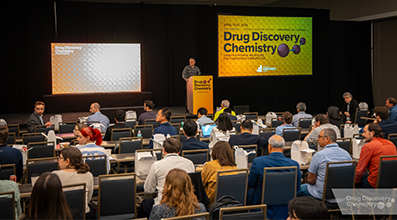
Explore upcoming conferences and scientific meetings where you can connect with our team.

At Sygnature Discovery, we deliver world-leading drug discovery solutions to accelerate your compound from idea to clinic.

Our leadership team brings diverse experience and insight, driving collaboration and innovation across drug discovery.

Explore careers at Sygnature Discovery and join a global team committed to science, collaboration, and integrity.
Inobrodib, an exciting, first-in-class oral anti-cancer drug in clinical development by CellCentric, was collaboratively designed, synthesised and supported on its pre-clinical journey by an integrated project team at Sygnature Discovery. Inobrodib is now showing promising results in Phase I and II trials for multiple myeloma and other cancer types.
At Sygnature Discovery, we deliver world-leading drug discovery solutions to accelerate your compound from idea to clinic.
Our leadership team brings diverse experience and insight, driving collaboration and innovation across drug discovery.
Explore careers at Sygnature Discovery and join a global team committed to science, collaboration, and integrity.
Euan A F Fordyce, S Fraser Hunt, Damien Crepin, Stuart T Onions, Guillaume F Parra, Chris J Sleigh, John King-Underwood, Harry Finch, John Murray
Correction for ‘Conformationally restricted benzothienoazepine respiratory syncytial virus inhibitors: their synthesis, structural analysis and biological activities’ by Euan A. F. Fordyce et al., Med. Chem. Commun., 2018, DOI: 10.1039/c8md00033f.
The authors regret that the information in note 17 in the References section of the manuscript gives an incorrect ratio of the isomers. The correct information is as follows:
17. The major impurity present in the mixture (29% isolated yield) was the corresponding propenyl thiophene 24, present as a 4 : 1 mixture of trans : cis isomers, which presumably form via elimination of triphenylphosphine oxide from the intermediate alkyloxytriphenylphosphonium species.
In addition, the wording in the Acknowledgements should be amended as follows:
The authors would like to thank Dr Kaz Ito (Pulmocide Ltd.) and Heather Allen (Pulmocide Ltd.) for the provision of the biological screening data for compounds 8a, 14 and 20.
The Royal Society of Chemistry apologises for these errors and any consequent inconvenience to authors and readers.
Atropisomeric drug substances are known to have different biological properties. Compounds containing the N-benzoylbenzazepine motif have been shown to exhibit energetically restricted rotation around the Ar(CO)N axis. Herein we report, for the first time, the synthesis, physical characterisation and anti-viral profiles of a series of C-4 and C-5 methylated thieno-benzazepines. NMR analysis reveals that incorporation of a single additional substituent at either of these loci influences the conformational dynamics of the azepine ring system. In the case of the C-5 alkyl analogues, the influence of the new stereocentre is so pronounced that its absolute configuration determines which unique atropisomer is obtained following the generation of the benzazepine nucleus. Screening of the alkylated derivatives for their anti-respiratory syncytial virus (RSV) activity indicates that the desired viral pathogenicity is strongly associated with the conformation adopted by the modified tricyclic scaffolds. This is particularly evident in the case of the C-5 homologues in which one atropisomer was found to be potently active and the other essentially inert. These results provide compelling evidence that we have determined the bioactive conformation shared by RSV inhibitors that employ the thienobenazapine nucleus as their core molecular architecture. Furthermore, the understanding obtained from these studies may make it possible to design improved agents against RSV infection in the future.
Ref: MedChemComm 2018

Peak Proteins, NuChem Sciences, and SB Drug Discovery have now fully integrated with Sygnature Discovery.